

'%3e%3cpath%20d='M24%200C10.7453%200%200%2010.7453%200%2024C0%2035.255%207.74912%2044.6995%2018.2026%2047.2934V31.3344H13.2538V24H18.2026V20.8397C18.2026%2012.671%2021.8995%208.8848%2029.9194%208.8848C31.44%208.8848%2034.0637%209.18336%2035.137%209.48096V16.129C34.5706%2016.0694%2033.5866%2016.0397%2032.3645%2016.0397C28.4294%2016.0397%2026.9088%2017.5306%2026.9088%2021.4061V24H34.7482L33.4013%2031.3344H26.9088V47.8243C38.7926%2046.3891%2048.001%2036.2707%2048.001%2024C48%2010.7453%2037.2547%200%2024%200Z'%20fill='black'/%3e%3c/g%3e%3cdefs%3e%3cclipPath%20id='clip0_1062_940'%3e%3crect%20width='48'%20height='48'%20fill='white'/%3e%3c/clipPath%3e%3c/defs%3e%3c/svg%3e)
'%3e%3cpath%20d='M44.4469%200H3.54375C1.58437%200%200%201.54688%200%203.45938V44.5312C0%2046.4437%201.58437%2048%203.54375%2048H44.4469C46.4062%2048%2048%2046.4438%2048%2044.5406V3.45938C48%201.54688%2046.4062%200%2044.4469%200ZM14.2406%2040.9031H7.11563V17.9906H14.2406V40.9031ZM10.6781%2014.8688C8.39062%2014.8688%206.54375%2013.0219%206.54375%2010.7437C6.54375%208.46562%208.39062%206.61875%2010.6781%206.61875C12.9563%206.61875%2014.8031%208.46562%2014.8031%2010.7437C14.8031%2013.0125%2012.9563%2014.8688%2010.6781%2014.8688ZM40.9031%2040.9031H33.7875V29.7656C33.7875%2027.1125%2033.7406%2023.6906%2030.0844%2023.6906C26.3812%2023.6906%2025.8187%2026.5875%2025.8187%2029.5781V40.9031H18.7125V17.9906H25.5375V21.1219H25.6312C26.5781%2019.3219%2028.9031%2017.4188%2032.3625%2017.4188C39.5719%2017.4188%2040.9031%2022.1625%2040.9031%2028.3313V40.9031Z'%20fill='black'/%3e%3c/g%3e%3cdefs%3e%3cclipPath%20id='clip0_1062_932'%3e%3crect%20width='48'%20height='48'%20fill='white'/%3e%3c/clipPath%3e%3c/defs%3e%3c/svg%3e)
The 2026 Global EV Connector Directory
Plug types around the world — and how ABRP picks the right one for your trip.

Gabriel Uggla
Lead UX/UI Designer
“Award-winning designer from Umeå Institute of Design, recognized by Red Dot and Gulltaggen.”
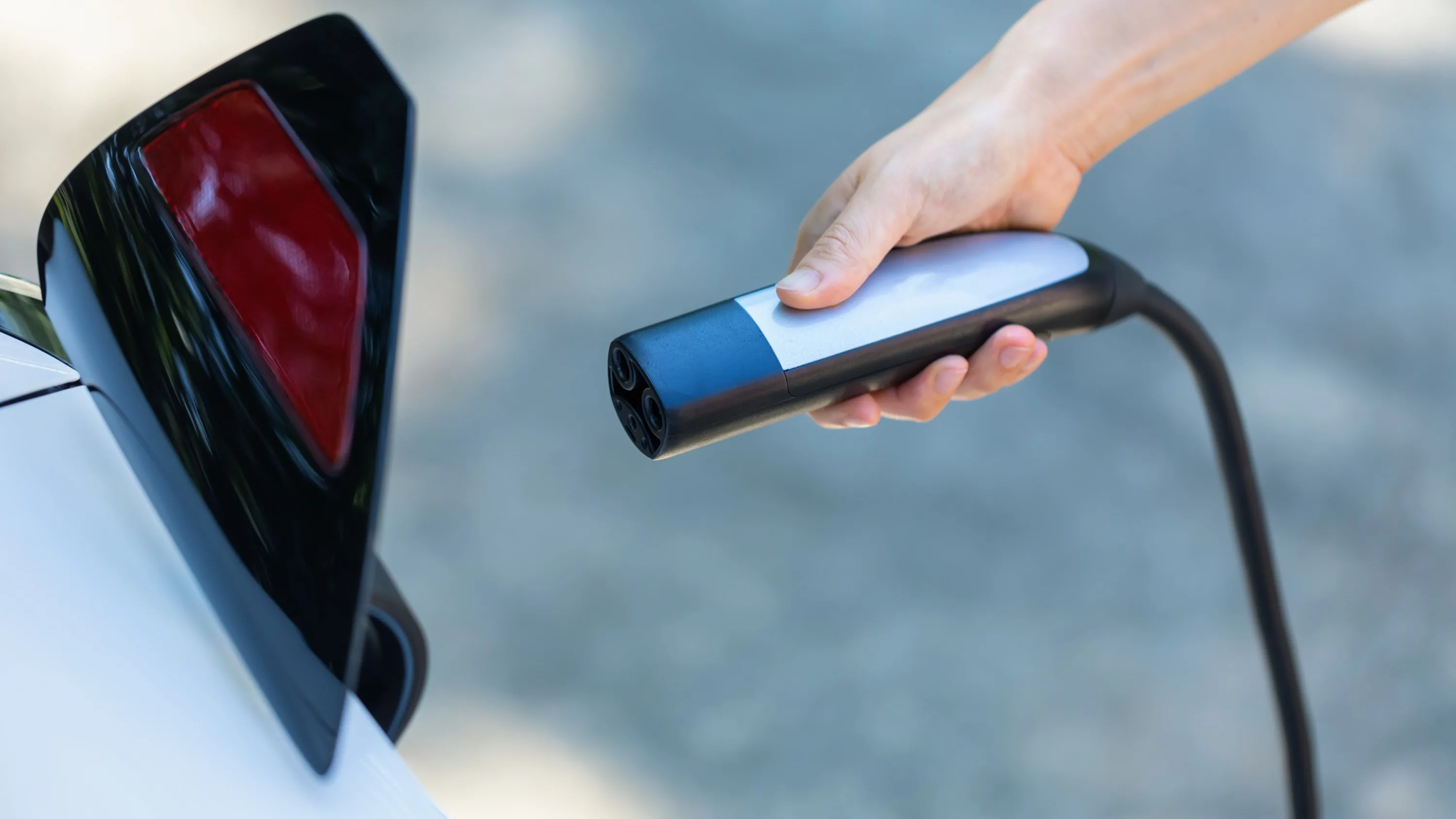
For any EV driver, the charging port is the most critical interface between the vehicle and the world. While the physical shapes vary by region and manufacturer, the underlying technology has converged significantly.
- NACS: The primary standard in North America. It is a single, slim plug used for both home (AC) and fast (DC) charging.
- CCS1: Common in North American legacy networks. While new cars are beginning to shift to NACS, the CCS1 network remains a vital part of the highway charging system.
- CCS2: The universal standard for high-speed DC charging in Europe and Oceania.
- Type 1: The standard for daily AC charging in North America and Japan. It is the most common connection found at home, work, and public "Level 2" stations in shopping centers.
- Type 2: The go-to for European AC destination charging. Most street chargers require you to provide your own cable.
- CHAdeMO: The CHAdeMO plug (short for "Charge de Move") was the very first system designed for high-speed DC charging in Japan.
- GB/T: The national standard for China, and also common in imported vehicles in South America. Increasingly popular in The Middle East, Southeast Asia, and South Asia.
NACS (North American Charging Standard)
Originally developed by Tesla, NACS is North America's primary connector. Most major manufacturers in North America ship vehicles with native NACS ports, allowing seamless access to the majority of high-speed infrastructure without adapters.
While most new EVs ship with native NACS ports, access to the Tesla Supercharger network depends on hardware generations:
- V3 & V4 Stalls (250kW+): Generally compatible. Almost the entire industry (Ford, Rivian, GM, Hyundai, Kia, Volvo, Mercedes-Benz, BMW, Volkswagen) has authorized access via adapters or native ports.
- V2 Stalls (150kW): Tesla-only. Despite the identical plug, older communication protocols prevent these from working with non-Tesla vehicles.
- Magic Dock: Open to all CCS vehicles; these stalls feature an integrated adapter unlocked via the Tesla app.
CCS1 (Combined Charging System Type 1)
CCS1 was the first major attempt to create a universal fast-charging plug in North America and South Korea by building upon the existing J1772 AC standard.
While new vehicle production has shifted toward NACS, CCS1 remains a massive part of the existing infrastructure. Drivers of these vehicles often carry an NACS to CCS1 adapter to utilize the expanding network of NACS-equipped stations.
CCS2 (Combined Charging System Type 2)
CCS2 is the mandatory standard for the European Union, United Kingdom, and Australia. While it shares the "Combo" philosophy of CCS1, its AC foundation is entirely different. It builds upon the Type 2 (Mennekes) AC plug, adding two DC pins at the bottom.
The biggest advantage of CCS2 is its support for three-phase AC. In Europe, even most Tesla utilizes the CCS2 port natively. This has created a highly interoperable environment where almost any car can use almost any charger without a second thought.
CHAdeMO
Developed in Japan, CHAdeMO (an abbreviation of "Charge de Move") was the world's first widely deployed DC fast-charging standard.
While it is being phased out in North America and Europe in favor of NACS/CCS, it remains the dominant standard in Japan and continues to be supported by legacy infrastructure globally.
Type 1 (J1772)
The Type 1 plug (often called the J-Plug) is the standard choice for AC charging across North America and Japan.
It is the primary choice for daily charging at home or at the office. In North America, almost all public "Level 2" chargers in parking lots and shopping centers come with a Type 1 cable attached and ready to plug in.
Type 2 (Mennekes)
The Type 2 plug is the standard for AC charging across Europe and much of the world outside North America.
It is the workhorse of destination charging. Most public AC street chargers in Europe require you to bring your own Type 2 to Type 2 cable to plug in.
GB/T
The GB/T standard is the exclusive charging system for the Chinese market. You may also encounter GB/T plugs in countries throughout Belarus, Southeast Asia, the Middle East, and South America.
This standard remains the most widely used in the world due to the sheer size of the Chinese EV market. Compared to CCS2 and NACS, it used one port for AC and one port for DC. If you are driving a car equipped with these ports elsewhere, you can use an adapter to connect to local NACS or CCS stations.
Comparison of Global EV Charging Standards (2026)
| Standard | Interface | Region | Primary Use | Max DC Speed | 3-Phase AC? | Key Feature |
|---|---|---|---|---|---|---|
| NACS |  |
North America | Home & Fast Charging | 350kW+ | No* | Slim, unified AC/DC design. |
| CCS1 |  |
North America | Fast Charging (Legacy) | 350kW | No | Bulkier "Combo" with latch. |
| CCS2 |  |
Europe / World | Universal Charging | 350kW+ | Yes | Standard for EU/UK/Australia. |
| CHAdeMO |  |
Japan / Global | Fast Charging (Legacy) | 100kW+ | No | Native support for V2H backup. |
| Type 1 |  |
North America / Japan | Destination Charging | N/A (AC only) | No | The standard "J-Plug" for home/work. |
| Type 2 |  |
Europe / World | Destination Charging | 43kW | Yes | Common "socket-only" street stations. |
| GB/T |  |
China / Belarus | Home & Fast Charging | 250kW-1.2MW | No | Uses separate AC and DC ports. |
*While the NACS hardware can technically support 3-phase in commercial settings, it is rarely implemented in North American residential vehicles.
The ABRP Advantage
No matter which port your car has, the challenge is always finding the right station with the right cable. A Better Routeplanner filters specifically for your vehicle's port type and any adapters you own, ensuring you never pull up to a plug that doesn't fit.